A hotel search for a Mangalore beach holiday can produce a surprisingly wide range of addresses. Some properties are close to a named beach, some offer a distant water view, and some use the city's coastal identity to describe an otherwise urban stay. None of those descriptions is automatically dishonest. They simply answer different questions. The useful task is to connect the language of the listing to the journey you actually want to make from your room to the shore.
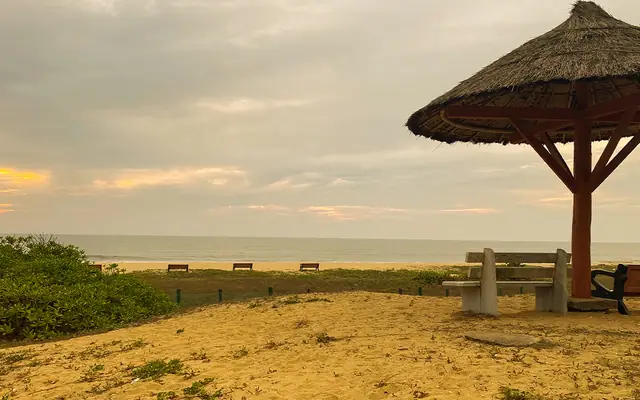
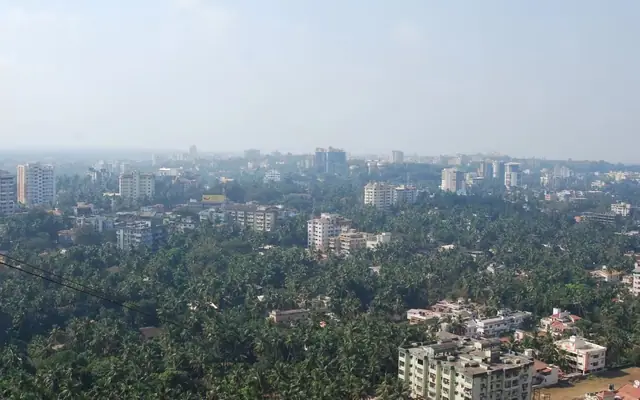
Panambur, Tannirbhavi, and Someshwara offer different starting points for that decision. The official tourism pages describe each as a distinct destination rather than three interchangeable labels for the same beach. This guide uses those descriptions to establish the setting, then provides an original process for checking a hotel. It does not rank properties, claim firsthand visits, or promise current facilities. The worked examples are hypothetical, and illustrative photographs are scenery rather than proof of a hotel's location or rooms.
Begin with the kind of beach day you want
Before comparing hotel names, describe a successful day in ordinary terms. You might want a short beach visit followed by dinner in the city, several unhurried hours near the water, or an early photographic outing before continuing elsewhere. Those plans place different demands on a hotel. A room with a view is valuable if you expect to spend time inside it, while a convenient exit and dependable return transport matter more if the beach is primarily an outing.
Write down who is travelling and what they will carry. A couple with one small bag can tolerate a route that becomes awkward with a stroller, an older relative, wet clothing, and several changes of footwear. Include a practical return time instead of assuming that staying until sunset will suit everyone. The best location is the one that supports your own day with the fewest unresolved steps. That definition is more useful than choosing the hotel that appears nearest to a blue area on a search map.
Panambur: separate the destination from the accommodation claim
Karnataka Tourism describes Panambur as a well-known Mangaluru beach with visitor activities and food options, while also noting that sea entry may be restricted when conditions are unsafe. Those are destination-level descriptions. They do not establish that a particular hotel offers direct access, that an activity will operate on your dates, or that an accommodation photograph was taken from the property itself.
For a hypothetical hotel advertising itself as near Panambur, ask which public entrance its staff actually recommend and how you reach that entrance. A short straight-line distance can conceal a much longer practical route. If your trip depends on an activity, verify the activity separately rather than treating it as a room inclusion. Ask who operates it, whether advance arrangements are needed, and what happens if it is unavailable. A hotel close to a beach can still be a good choice without selling a complete beach programme; clarity about that distinction prevents expectations from expanding after you have already booked.
Tannirbhavi: understand the access option you are buying
The Tannirbhavi tourism description highlights coastal trees, the nearby tree park, and a ferry connection associated with Sultan Battery. These details help explain why travellers might choose the area, but a mention of a ferry is not a guarantee of a service at every desired time. Nor does a scenic approach necessarily work as the simplest luggage transfer between your arrival point and hotel.
Ask a shortlisted property to describe both your check-in route and your beach-outing route. They may be different. In a hypothetical plan, a family could reach its hotel by road and consider a separate ferry outing only after checking the day's operation. That is easier to evaluate than assuming a ferry will carry every bag and connect neatly with a late arrival. Confirm the final walking section as well as the vehicle or boat portion. A pleasant coastal setting can remain pleasant without making every part of the trip depend on one unverified transport link.
Someshwara: choose the shoreline for the right reason
Karnataka Tourism associates Someshwara with its temple, prominent rocks, and a rugged shoreline, and specifically cautions about strong currents. That context supports a photography or coastal-landscape interest; it does not support treating the destination as an unrestricted swimming holiday. A hotel photograph featuring dramatic surf should not be translated into a promise that guests can enter the sea immediately outside.
If Someshwara is your main reason for visiting, identify the exact place you want to reach and whether the hotel is on the same practical route. A hypothetical traveller planning a short temple-and-shore visit may value a straightforward pickup point more than a distant sea view. Someone staying longer may prefer room space and nearby meals. Ask about the path surface, stairs, lighting, and the return journey without requesting a broad assurance that everything is safe. Local restrictions and conditions on the day take precedence over a promotional description, a photograph, or any suggested itinerary in this guide.
Translate beachfront, sea view, and near beach into facts
These three phrases should trigger three different sets of questions. Beachfront should lead you to ask whether the property boundary meets the beach and whether guests have a usable, permitted route between them. Sea view should lead you to ask which room category and orientation provide the view. Near beach should lead you to ask the actual travel route and transport required. A correct answer in one category does not answer the others.
Imagine a hypothetical upper-floor room that sees the sea across intervening buildings. It could legitimately offer a water view while requiring a drive to the beach entrance. Another property might have no useful room view but a simple pedestrian route. Neither is inherently better. The mistake is to compare their labels as if they describe the same benefit. Request a marked map pin for the hotel entrance and the recommended beach access point. Then ask the property to explain the connection in words. Specific answers are easier to assess than an attractive adjective repeated from the listing.
Check the whole route rather than the map distance
A useful access check covers the door, vehicle pickup point, road section, crossing, parking area, final path, and return pickup. When one part is missing, a short trip can become an unexpectedly demanding outing. Ask whether the final approach is paved, sandy, stepped, or uneven and whether the described route is the one guests currently use. Avoid treating a map's walking suggestion as confirmation that the route is suitable for your group.
For a hypothetical guest carrying camera equipment, an exposed last section may matter more than the distance travelled in a car. For a family with a stroller, a short sandy section may change the equipment they bring. If mobility access is essential, describe the actual requirement and seek measurements or recent route photographs where available. A generic accessible label cannot substitute for that conversation. Keep the answer alongside the booking confirmation so that a change in entrance or pickup arrangements can be identified before the group sets off.
Compare a city base with a coastal base honestly
You do not need to sleep beside the beach to enjoy a beach visit. An urban hotel can make sense when the trip also involves meetings, railway arrivals, several dining plans, or time in different parts of Mangaluru. A coastal base can make sense when the shoreline is the central purpose and you prefer to reduce repeated travel. The comparison should include the entire itinerary rather than treating one location style as more authentic.
Create a hypothetical two-night plan for each option. Note how many times the group would travel, which meals require transport, and where luggage remains on arrival and departure days. Avoid assigning invented taxi prices or guaranteed travel times. Instead, identify which costs need a current quotation. A city hotel with a planned beach outing may offer a more predictable schedule than an isolated stay with several additional journeys. Equally, a well-suited coastal property may simplify a beach-focused break. The better choice emerges from the trip's pattern, not a universal rule about distance from the water.
Plan for a day when the shore is not the main activity
Rain, restrictions, uncomfortable weather, or a tired group can change a beach plan. Select a hotel that still works when the planned outing is shortened. This does not require an elaborate resort facility list. It may simply mean a room configuration that permits rest, a practical meal option, covered access to transport, and enough clarity about check-in and checkout to avoid spending several hours waiting with luggage.
In a hypothetical family itinerary, the beach could remain an optional late-afternoon outing rather than the only meaningful activity of the day. Check official visitor information for any alternative destination you choose, including its actual opening arrangements. Do not assume that an attraction mentioned nearby is open whenever the beach plan changes. For the hotel itself, distinguish a public lobby from a space where your group is welcome to stay comfortably for a long period. Ask about luggage storage and waiting arrangements directly, especially if your transport leaves well after checkout.
Read photographs as evidence with limits
A beach photograph can establish what a photographer saw, but it does not establish the location of the hotel selling the room. A room image can show a room category without proving that every room has the same layout or view. A wide-angle image can make the connection between a balcony and a coastline appear more direct than the actual walking route. Use images as the beginning of a question, not the end of verification.
Check captions and compare the image with the named room category. Ask whether the displayed view is from that category and whether the view is guaranteed or subject to room allocation. For editorial photographs on this site, a coastal or room image identified as illustrative must not be interpreted as an inspected feature of a named property. If an image is important to your decision, request a current description in writing. The purpose is not to distrust every attractive picture; it is to avoid asking a picture to prove something it cannot show.
Make the final decision with a short confirmation note
Before paying, assemble a short note containing the selected beach, exact hotel address, booked room category, occupancy, practical access route, meal plan, and cancellation conditions. Add the current answer to any essential question, such as whether transport can collect your group at the return point. If a requirement has not been confirmed, leave it visibly unresolved rather than assuming that no reply means agreement.
Then test the booking against one ordinary disruption: rain, a later arrival, a closed activity, or an earlier departure. Would the accommodation still meet the basic purpose of the trip? A robust Mangalore beach stay is not necessarily the property with the strongest beachfront language. It is the one whose confirmed room, access, and schedule match the holiday you can realistically take. Panambur, Tannirbhavi, and Someshwara can each be part of a thoughtful plan once their different settings are respected and the practical route between the hotel and shore is understood.